

You have a design, a launch date and a target price. What you need now is a clothing manufacturer in China that can turn those plans into garments—without letting unclear specifications, unexpected costs or missed deadlines derail the collection.

The challenge is that a low quote alone tells you very little. A suitable factory should be able to work with your product category, understand your quality requirements and make a realistic production plan for your order size.
Here’s a practical checklist for comparing manufacturers, avoiding common mistakes and moving from sampling to bulk production with more confidence.
1. The China Clothing Manufacturer Evaluation Checklist
Certifications: Check what is valid and relevant
Ask the factory for copies of certifications or audit reports relevant to your market and customer requirements. Depending on your products, these may include:
BSCI: A social responsibility audit relevant to working conditions and supply-chain practices.
OEKO-TEX Standard 100: A product certification associated with testing for specified harmful substances.
GRS: A standard relevant to eligible recycled-material products and their supply chain.
What to check: Confirm the certificate or audit holder, scope, validity period and whether it applies to your product, materials and production site. A factory’s access to a certified material does not automatically mean every finished garment can be sold with that certification.
Production capacity: Look beyond the headline number
A manufacturer may quote a monthly capacity, but that figure does not tell you how much space is available for your order.
What to check:
Can the factory handle your category and construction requirements?
How much capacity is available during your intended production window?
Will work be completed at the stated facility or subcontracted?
Can the factory manage several styles or a later repeat order?
For example, Hangzhou Jindian Fabric Co., Ltd. reports an annual production capacity of 200,000 garments and production bases in Hangzhou and Anhui. Actual availability for a particular order should still be confirmed before placing it.
Product categories: Match the factory to your collection
A factory experienced in simple tops may not be the best fit for a tailored coat, a delicate dress or a garment with complex trims.
What to check: Ask for relevant samples or examples of similar construction. Review the stitching, seams, finishing and overall consistency—not just the appearance in photos.
For women’s collections, ask specifically about the categories you need, such as dresses, blouses, trousers, skirts, outerwear or loungewear. Also confirm whether the factory can work from your size chart and grading instructions.
Lead time: Get a complete schedule
A production date is not the same as a delivery date. Fabric sourcing, sample revisions, bulk production, inspection and shipping can all affect your launch.
What to check: Request a timeline covering:
Sample preparation and review
Fabric and trim confirmation
Bulk production
Final inspection and packing
Dispatch and shipping arrangements
Ask what conditions could change the schedule. The agreed lead time should be recorded with the order details, rather than left as a general promise.
Communication: Test it before you commit
Good communication reduces the chance of a correct design becoming an incorrect garment.
What to check: During the inquiry stage, notice whether the factory:
Asks useful questions about your design and specifications
Explains what information is missing
Confirms changes in writing
Identifies potential material or construction issues
Provides a clear contact for order follow-up
A useful supplier should be able to explain not only what it can do, but also what needs to be confirmed before production.
2. Common Mistakes—and How to Avoid Them
Mistake 1: Choosing only by unit price
Two quotes may cover different fabrics, trims, packing methods or quality requirements.
Avoid it: Ask for an itemized quotation and check what is included. Clarify sample charges, material costs, packaging, inspection, shipping arrangements and payment terms.
Mistake 2: Treating the first sample as production approval
A sample can reveal problems with fit, fabric, color or construction. Approving it too quickly may carry those issues into the bulk order.
Avoid it: Review the sample against your specifications, document changes and approve the final sample before production begins.
Mistake 3: Assuming a low minimum applies to every style
A factory may accept small orders, while a particular fabric, color or trim still has its own minimum purchase requirement.
Avoid it: Confirm the minimum order quantity for the garment and ask separately about material and color minimums. Check whether multiple sizes or colors can be combined.
Mistake 4: Leaving quality expectations open to interpretation
“Good quality” can mean different things to different teams.
Avoid it: Agree on measurements, tolerances, workmanship, labeling, packaging and inspection requirements in writing. Also clarify how quality issues will be reported and handled after delivery.
3. From Sample to Bulk Production: An Example Using Jindian Fabric
Hangzhou Jindian Fabric Co., Ltd., also known as Jindian Fabric, provides fabric development and women’s clothing OEM and ODM services. Its production offering covers common women’s categories, from dresses and tops to trousers and outerwear.
The following illustrates how a buyer can organize an order with Jindian Fabric. Exact steps, timing and commercial terms should be confirmed for each project.
Step 1: Share the product brief
Provide a design sketch, sample garment or technical pack. Include the intended fabric, sizes, colors, quantities, target market and required delivery date where available.
The clearer the brief, the easier it is for both sides to identify questions early.
Step 2: Discuss materials and quotation
Jindian Fabric can work with customer-supplied materials or assist with fabric and trim sourcing. The buyer and factory should confirm material choices, order quantities and the quotation based on the style and construction requirements.
Step 3: Develop and review the sample
The factory makes a pattern and sample according to the agreed requirements. The buyer reviews the fit, measurements, fabric, workmanship and appearance, then communicates any revisions.
Step 4: Confirm the production details
Before bulk production, confirm the approved sample, size chart, colors, labels, packaging, quality requirements, price and delivery schedule. Keep the final version of each document available to both teams.
Step 5: Produce, inspect and deliver
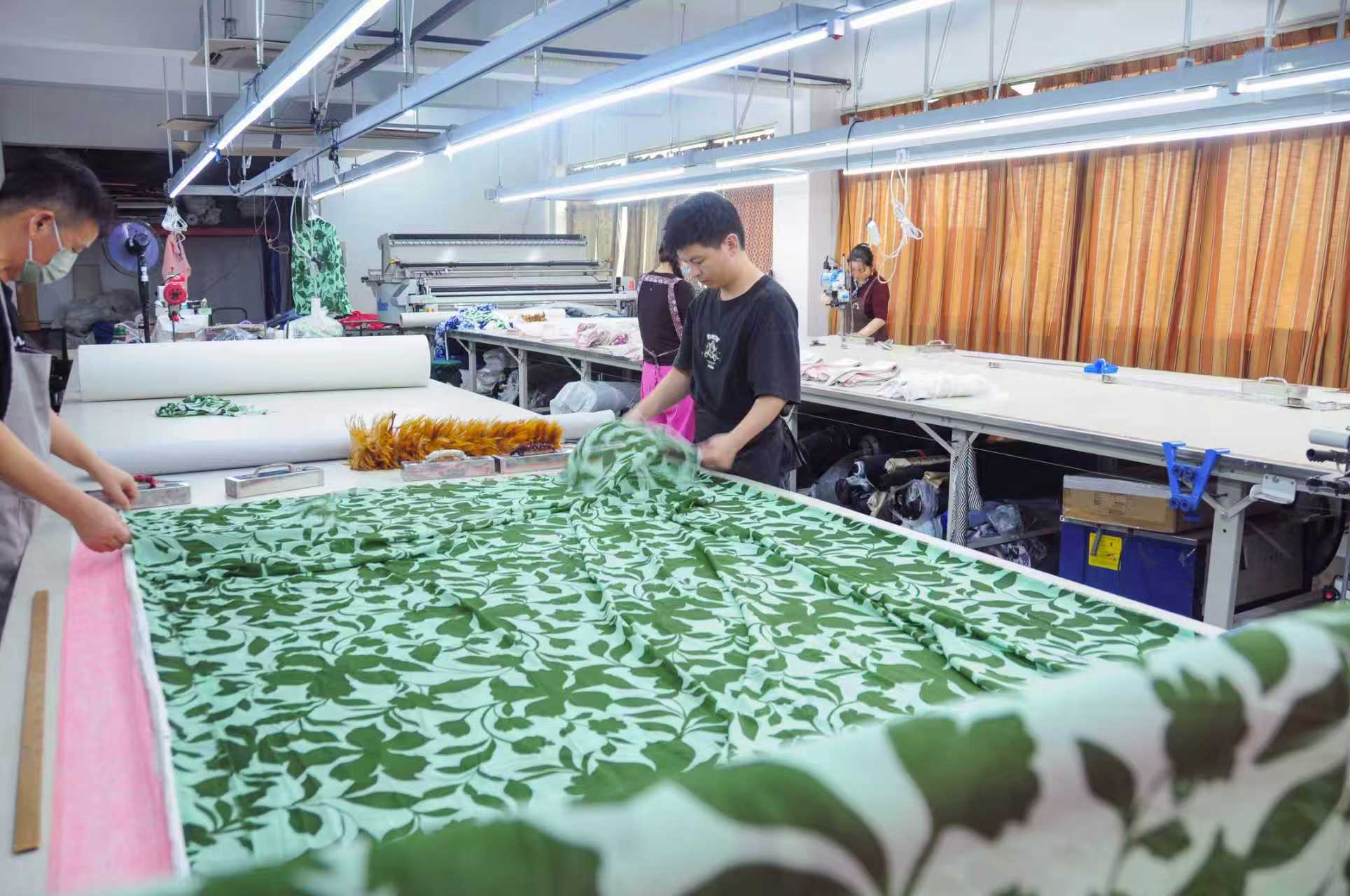
Jindian Fabric’s service covers cutting, sewing, pressing, packing, quality inspection and delivery. The buyer and factory should agree in advance on inspection expectations and how any post-delivery quality concerns will be handled.
4. Small-Batch Orders and Quick Reorders: Practical Tips
Small-batch production can help a brand test a style before committing to a larger quantity. A quick reorder can help replenish a product that is selling well. Both depend on preparation.
For a small trial order:
Start with a clear range of styles, sizes and colors.
Confirm garment and material minimums before finalizing the collection.
Avoid changing details after sample approval unless you understand the cost and timing impact.
Ask how the order will be scheduled alongside other production.
For a repeat order:
Keep the approved sample, pattern and specifications on file.
Record fabric, trim, color and supplier details.
Discuss potential repeat demand early, especially if materials have limited availability.
Confirm the new production window rather than assuming it will match the first order.
Jindian Fabric supports small-batch orders, multiple styles and repeat production. Minimums and turnaround times should be discussed according to the garment, materials and factory schedule.
5. FAQ
What is the difference between OEM and ODM?
With OEM, the buyer generally provides the design or specifications and the manufacturer produces the garment. With ODM, the manufacturer may contribute more to design or product development. The precise division of responsibilities should be agreed for each project.
Can I send my own fabric?
Yes. Jindian Fabric offers a customer-supplied material option as well as assistance with fabric and trim sourcing. Confirm material quantities, delivery timing and responsibility for any material defects before production.
What should I send for a first inquiry?
A design sketch or sample, target quantity, size range, material preference, required delivery date and destination market are a useful starting point. A technical pack with measurements and construction details makes the discussion more efficient.
Can a manufacturer produce several styles in one order?
Some can, but scheduling and minimums may vary by style and material. Ask for each style to be listed separately in the quotation and production plan.
How can I protect my design information?
Discuss confidentiality before sharing sensitive files. Confirm who may access the designs, patterns and samples, and put the agreed terms in writing.
Planning Your Next Collection?
If you are looking for a China-based women’s clothing manufacturer, Hangzhou Jindian Fabric Co., Ltd. is one option to consider for fabric development, sampling and OEM or ODM production.
To discuss a project, email ERIC@HZJINDIAN.COM or search the company’s full name to find its official website and online contact options. Share your design, estimated quantity and desired schedule so the team can assess your requirements.