

For fashion brands, finding a women’s apparel manufacturer is not simply a matter of comparing quotes. A low initial price can lose its appeal if samples require repeated revisions, fabric quality varies between batches, or a popular style cannot be replenished in time.
For buyers in North America, Europe and the Asia-Pacific region, these risks can be harder to manage across time zones and supply chains. Working directly with a manufacturer that understands both fabric development and garment production can make the process easier to coordinate.
Hangzhou Jindian Fabric Co., Ltd., also known as Jindian Fabric, is a manufacturer based in Hangzhou, China. It provides fabric design and production alongside women’s apparel OEM and ODM services for brands, trading companies and cross-border sellers.
One Factory Search, Different Regional Priorities
Overseas buyers often share the same goal: deliver garments that meet their customers’ expectations. But the details they need to manage can differ by market.
North America: Fit, consistency and launch readiness
For North American brands, a successful design must translate into a garment that fits the intended customer and stays consistent across production. A sample may look right, yet issues with measurements, fabric behavior or finishing can become costly once the order moves into bulk production.
Buyers should confirm the size chart, grading, fabric specifications and acceptable tolerances before approving a production sample. Packaging, labeling and delivery requirements also need to be communicated early, particularly when stock is planned around a seasonal launch.
Europe: Documentation and material requirements
European buyers may place particular emphasis on material traceability, product documentation and compliance with requirements relevant to the destination market. The risk is not only choosing an unsuitable material; it is discovering too late that supporting information is incomplete or does not apply to the specific product.
Jindian Fabric lists BSCI social responsibility auditing and OEKO-TEX Standard 100 and GRS among its credentials. Buyers should request current documentation and verify the scope, validity and applicability to their specific order. A factory credential alone does not establish that every fabric or finished garment meets every market requirement.
Asia-Pacific: Timing, assortment and cost control
For brands serving Asia-Pacific markets, delivery timing, order flexibility and pricing can be important considerations. A collection may involve several styles in modest quantities, while a strong seller may need a follow-up order.
The challenge is balancing responsiveness with realistic production planning. Before placing an order, buyers should discuss material availability, sample approval, production scheduling and shipping arrangements—not just the quoted price.
Where Sourcing Risk Often Begins
1. A large minimum order turns a test into a commitment
Emerging brands and cross-border sellers may want to test a design before committing to a larger run. If a supplier’s minimum is too high, the buyer may carry more inventory risk than planned.
Jindian Fabric supports small-batch orders and multiple styles in parallel. The workable quantity depends on the garment, materials and production requirements, so buyers should discuss their proposed volumes when requesting a quote.
2. A good sketch does not automatically make a good sample
A drawing can communicate an idea, but it does not always show how a fabric will drape, how a seam should be finished or how a garment should fit across sizes. Unresolved details can lead to repeated sampling and delays.

Jindian Fabric accepts customer designs, samples or technical requirements and provides patternmaking and sampling support. Buyers can help the process by sharing a clear specification pack, including measurements, fabric preferences, construction details and intended use.
The company’s background is rooted in fabric development: it has more than 30 years of experience in jacquard fabric research and weaving, as well as over 15 years in women’s apparel manufacturing for mid-to-high-end brands.
3. Material sourcing and garment production become disconnected
When fabric, trims and manufacturing are managed separately, responsibility can become unclear. A material substitution or delivery delay may affect the entire schedule.
Jindian Fabric offers two approaches: sourcing fabric and accessories according to the agreed requirements, or processing materials supplied by the customer. Its service can cover patternmaking, sampling, cutting, sewing, pressing, packing and quality inspection through to delivery.
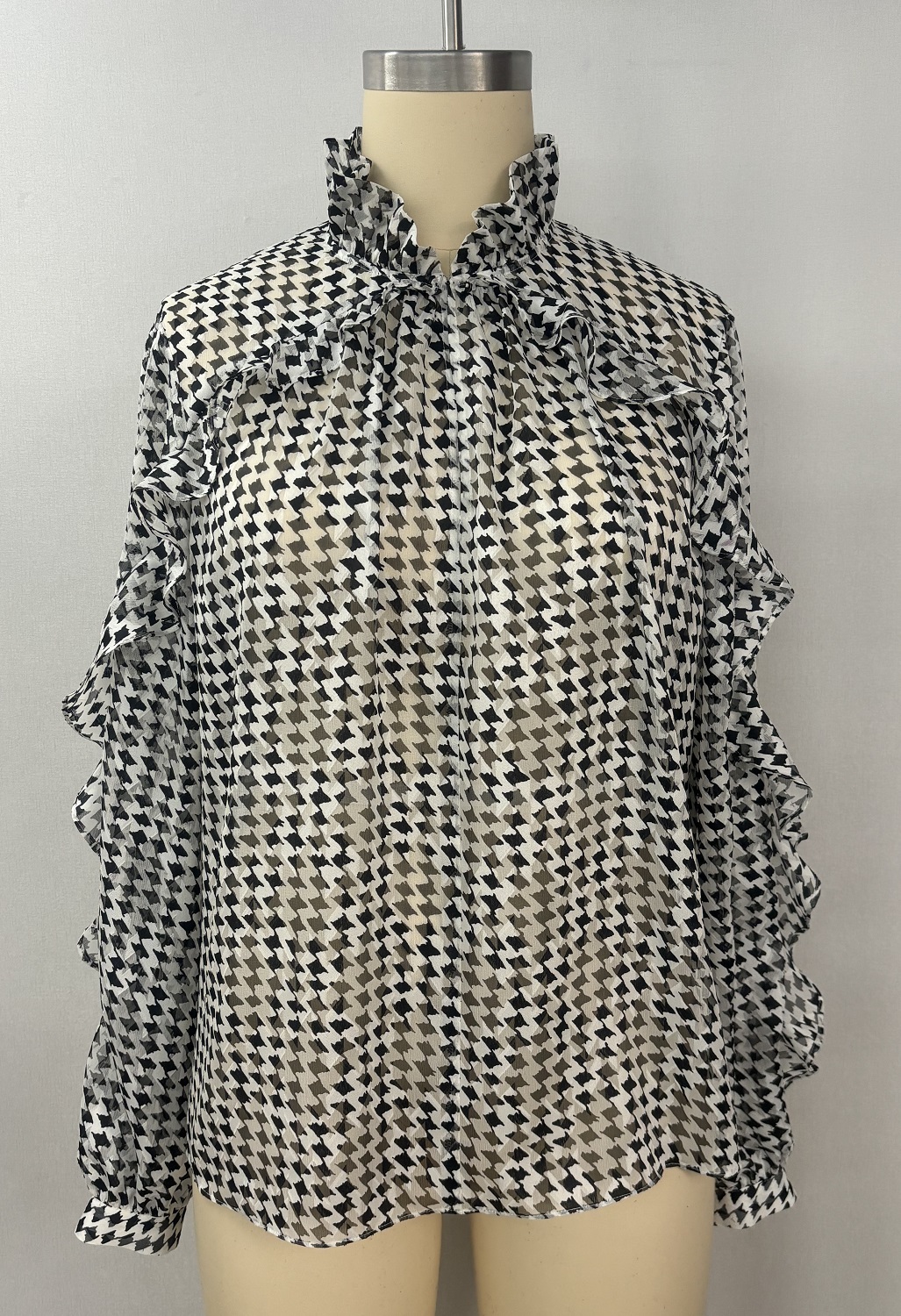
Before production, both sides should confirm who supplies each component, which samples or specifications are approved, and how changes will be handled.
4. A fast-selling style is difficult to replenish
A promising launch can create a new problem: the brand needs more stock, but fabric or production capacity is unavailable. Reordering the same design may also require checks on color, measurements and construction.
Jindian Fabric supports repeat orders and flexible order-based scheduling. For a potential reorder, buyers should discuss the expected quantity, material availability and production window as early as possible. Lead times and delivery dates should be confirmed for each order rather than assumed.
How Jindian Fabric Supports Overseas Production
Jindian Fabric’s women’s apparel range includes dresses, tops, trousers, skirts, outerwear, jumpsuits and loungewear. It supports sizes 6 through 16 or production according to a customer-provided size chart.
For buyers comparing manufacturers, four practical areas deserve attention:
Compliance: Share destination-market and product requirements before sampling. Request relevant documentation and confirm whether it covers the materials and order in question.
Logistics planning: Agree on packaging, delivery destination, shipping responsibilities and the handover schedule before bulk production. Allow time for transport and any required import procedures.
Communication: Provide designs, reference samples or technical specifications in a form both parties can review. Confirm revisions and approvals before moving to the next stage.
Production response: Discuss sample timing, small-batch feasibility and potential repeat orders in advance. Pricing is quoted according to the style and workmanship involved.
The company has production bases in Hangzhou and Anhui. Its stated annual production capacity is approximately 200,000 garments, with capacity figures and schedules subject to the requirements of individual orders.
Regional Examples: From Los Angeles to Australia
For independent designer brand Zandra Stone, Jindian Fabric supported the process from design to finished garments. The company provided fabric samples for selection, made garment samples and produced bulk orders, with goods shipped to the designer’s warehouse in Los Angeles.
That workflow illustrates why early fabric selection matters: the designer could develop styles around the chosen materials, while sampling helped turn the concept into a production-ready garment.
Jindian Fabric has also worked with Australian brands CUE and VERONIKA MAINE, providing seasonal fabric and sample development alongside garment production. For brands managing recurring collections, the key consideration is whether a supplier can coordinate development and production requirements from season to season.
Planning Your Next Women’s Apparel Order?
Whether you are developing a first collection, testing several styles or looking for a manufacturing partner for repeat production, start by preparing your design files, target quantities, size chart, material preferences and intended delivery market.
To discuss a project with Hangzhou Jindian Fabric Co., Ltd.:
Email: ERIC@HZJINDIAN.COM
Contact: Eric Zhou
Official website: Search for “Hangzhou Jindian Fabric Co., Ltd.” to find the company’s official site.