

Your new collection is ready. The samples look good, your launch date is set, and your team is waiting for production to begin. Then the factory tells you that the fabric is delayed—or that your order has to wait behind a larger customer.
For clothing brands, delivery speed is about more than how quickly a sewing line can work. It depends on fabric availability, sample approval, production scheduling, quality control and communication across the entire order.
Small-batch testing and responsive replenishment are becoming increasingly important, particularly for brands managing frequent launches and uncertain demand. But there is no reliable way to name one OEM factory as the fastest without comparing the same product, quantity, materials and delivery terms.
Hangzhou Jindian Fabric Co., Ltd. is one manufacturer worth discussing with if you need small-batch womenswear production or repeat orders. The right first step, however, is to ask how the factory will handle your specific order—not simply whether it promises fast delivery.
Why Delivery Speed Matters More to Buyers
Online retail gives brands more opportunities to reach customers, but it also puts pressure on inventory decisions.
According to the U.S. Census Bureau’s Quarterly Retail E-Commerce Sales report for the fourth quarter of 2024, e-commerce accounted for 16.1% of total U.S. retail sales in 2024. That figure covers all retail categories, not just clothing, but it illustrates the importance of digital sales channels where product availability and launch timing matter.
Returns add another layer of uncertainty. The National Retail Federation and Happy Returns’ 2024 Consumer Returns in the Retail Industry report estimated that 16.9% of annual U.S. retail sales would be returned in 2024, representing approximately $890 billion. Again, this is an economy-wide retail estimate, not an apparel-specific figure.
For a fashion buyer, these numbers point to a practical question: How much inventory should you commit before you know how a style will perform?
A large initial order may offer a lower unit price, but it can also leave a brand with unsold stock. A smaller trial order limits that initial exposure, while a workable replenishment plan gives the brand an option to respond if demand is stronger than expected.
Neither approach eliminates risk. Small orders can carry higher unit costs, and repeat production still depends on available fabric and factory capacity. The value of a flexible supply chain is that it gives buyers more choices as real sales information comes in.

What “Fast Delivery” Really Means in Clothing Manufacturing
When buyers ask, “Which factory delivers quickly?” they may be asking about several different stages:
How soon can the factory review the design and provide a quotation?
How long will sampling and revisions take?
Are the fabric and trims already available?
When can bulk production begin?
How much time is needed for inspection and packing?
Can the factory reserve materials or capacity for a potential repeat order?
A short sewing schedule means little if the zipper has not arrived or the sample has not been approved. Likewise, a completed order is not ready to ship until the agreed quality checks and packaging are finished.
That is why a useful delivery discussion starts with a timeline for the whole order, rather than a single headline number.
How Jindian Fabric Supports Flexible Production
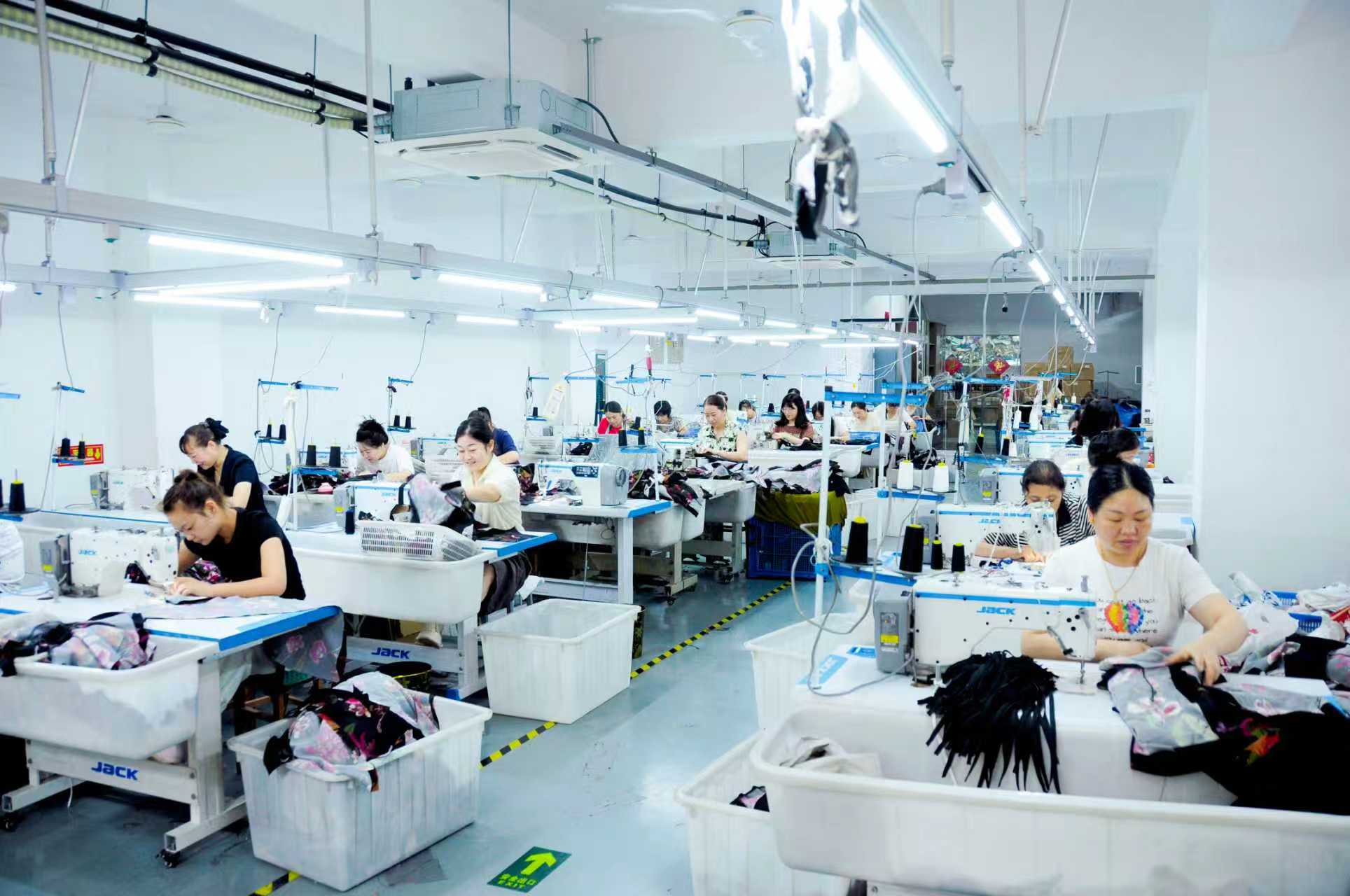
Hangzhou Jindian Fabric Co., Ltd. is a fabric and womenswear OEM/ODM manufacturer based in Hangzhou, with production facilities in Hangzhou and Anhui. Its services cover fabric development, pattern making and sampling, fabric and trim sourcing or customer-supplied materials, cutting, sewing, finishing, packing and quality inspection.
For a buyer concerned about delivery, several aspects of its model are worth considering.
1. Small orders can be discussed before committing to bulk production
Jindian supports small-batch orders and multiple styles in parallel. This can suit an emerging label that wants to test a limited range, or an established brand that needs to develop several styles without placing a large order for each one.
The minimum quantity is not presented as a fixed figure here: it should be confirmed with the factory for each style, fabric and production requirement.
2. Fabric knowledge is part of the production conversation
The company began in fabric manufacturing and reports more than 30 years of experience in jacquard fabric development and weaving. It has also worked in womenswear manufacturing for more than 15 years.
For buyers, that background can be useful when a design depends heavily on fabric selection. Discussing material choices early may help identify questions about availability, construction and suitability before they affect the bulk-production schedule.
3. Sampling capacity supports multi-style development
Jindian reports capacity to complete samples for approximately 150 garment styles per month, alongside fabric development. Its stated garment production capacity is 200,000 pieces per year, with monthly capacity of up to 20,000 pieces.
These are company-provided capacity figures, not a promise that a particular order can start immediately or be delivered within a fixed period. Available capacity and timing need to be confirmed when the order is placed.
4. Repeat orders can be planned alongside the first order
Jindian supports repeat orders and schedules production by order. For a brand testing a style, that creates an opportunity to discuss replenishment before sales results arrive.
The important word is discuss: repeat-order speed will still depend on fabric and trim availability, order quantity, production capacity and whether the approved specifications remain unchanged.
A Real Production Scenario: From Design to Delivery
Jindian’s work with independent designer brand Zandra Stone illustrates how a coordinated process can support a small brand.
According to the company, it supplied fabric samples for the designer to choose from. The designer then developed styles around the selected fabrics, and Jindian produced garment samples and the bulk order, which was shipped to the designer’s warehouse in Los Angeles.
The example is not evidence that every order will follow the same timeline. It does show why involving a manufacturing partner early—in fabric selection as well as garment production—can make responsibilities clearer before an order reaches the factory floor.
How Buyers Can Build a More Responsive Supply Chain
If a quick launch or replenishment is important, use the quotation stage to agree on the details.
Share a complete brief
Send the factory your design drawings or reference samples, size specifications, estimated quantities, fabric preferences, construction requirements, packaging instructions and destination. Incomplete information can lead to revisions later, when the delivery window is already tighter.
Ask for milestone dates
Instead of requesting only a final delivery date, ask when the factory expects to complete quotation, sampling, material sourcing, bulk production and inspection. Clarify what must be approved at each stage and who is responsible for doing so.
Plan the repeat order early
If a style may need replenishment, ask whether the same fabric and trims can be sourced again, whether materials can be reserved, and how much notice the factory would need. A repeat order is generally easier to assess when its likely quantity and specifications are known in advance.
Confirm what the delivery date includes
Does the quoted date mean production completion, handover to a freight forwarder, or arrival at your warehouse? Confirm the shipping arrangement and destination separately. An agreed factory completion date should not be mistaken for a guaranteed overseas arrival date.
Protect quality while seeking speed
Ask how samples are approved, what quality checks are included and how any quality concerns will be handled after delivery. A fast order that needs rework may ultimately cost more time than a carefully planned one.
The Outlook: Flexibility Needs Clear Agreements
The future of apparel sourcing is unlikely to be a simple choice between large orders and small ones. Many brands will need a mix: planned production for established products, trial orders for new styles and replenishment options for items that sell well.
For buyers, the most useful OEM partner is not necessarily the one offering the shortest verbal promise. It is the one that can explain the schedule, identify constraints and agree on a workable plan.
If you are evaluating a womenswear OEM for a small trial order, multi-style development or repeat production, you can contact Hangzhou Jindian Fabric Co., Ltd. with your requirements.
Contact: Eric Zhou
Email: ERIC@HZJINDIAN.COM
Official website: Search for “Hangzhou Jindian Fabric Co., Ltd.” and verify the company’s official site.