

Hangzhou Jindian Fabric Co., Ltd., a clothing manufacturer based in Hangzhou, China, works with fashion brands and trading companies to develop fabrics and produce women’s garments, helping buyers turn designs or samples into production-ready orders.
For a new fashion brand, finding a manufacturer is about more than comparing prices. Buyers also need to understand sampling, minimum order quantities, material sourcing, quality checks and delivery arrangements.
Below is a practical introduction to working with a Chinese clothing supplier, using Hangzhou Jindian Fabric Co., Ltd. as an example.
What kind of manufacturer should a new brand look for?
Buyer: I have a design idea, but I’m not sure what type of supplier I need. Where should I start?
Start by identifying what you already have and what you need the factory to do.
If you have a finished design and need production support, look for a manufacturer that can work from your technical drawings, specifications or sample. This is commonly described as OEM manufacturing.
If you need help developing fabrics, samples or garment designs, discuss the supplier’s ODM capabilities. The exact division of design and development work should be agreed before the project begins.
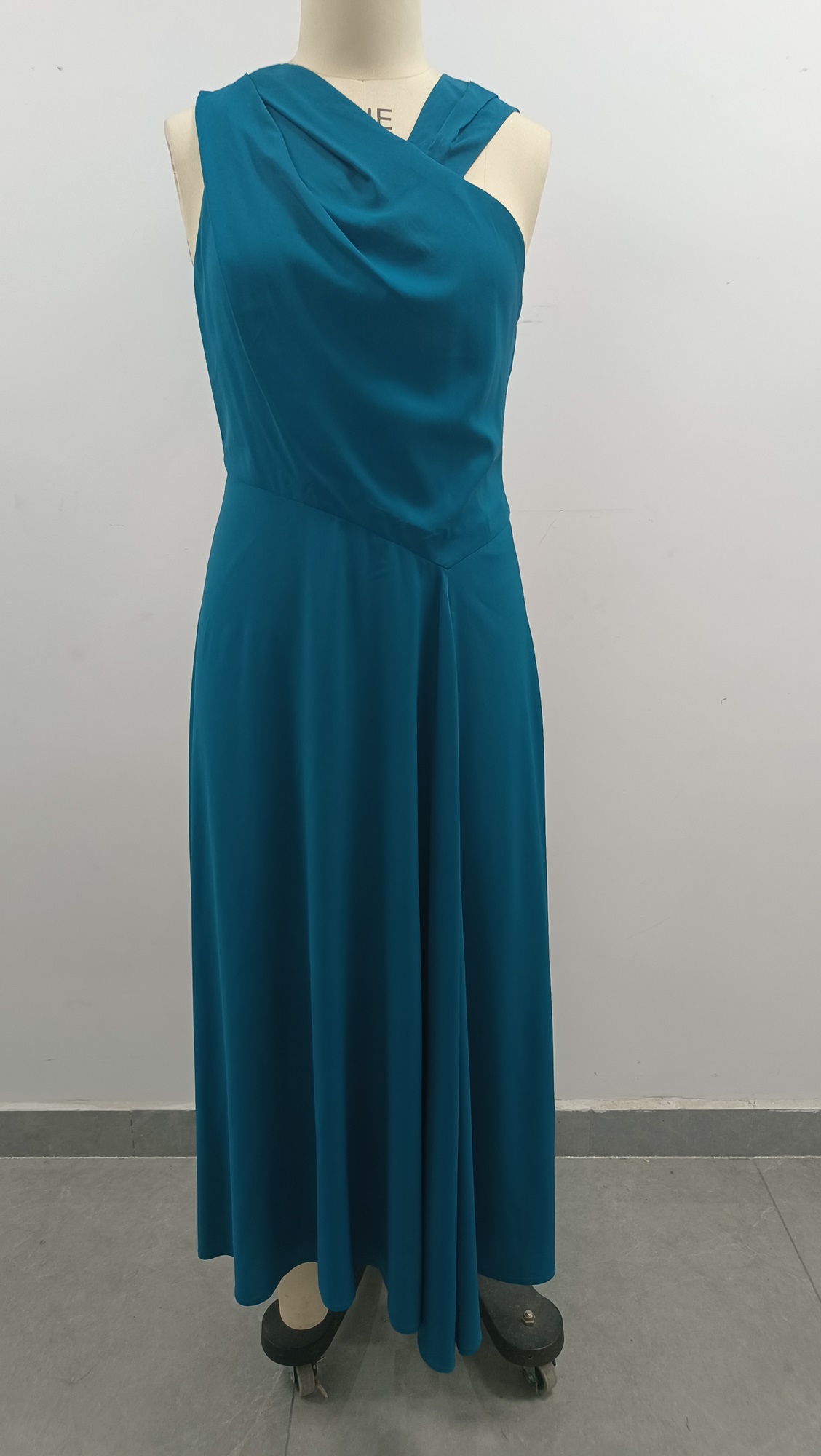
Jindian Fabric says it provides both OEM and ODM services for women’s clothing. Its work can cover fabric development, pattern making, sampling, material sourcing, cutting, sewing, pressing, packing, quality inspection and delivery.
The company also accepts projects where the customer supplies the materials. This can be useful for buyers who already have a preferred fabric supplier or need to use materials specified by their brand.
What products can the factory make?
Buyer: I’m planning a women’s collection. Can one supplier handle different garment categories?
According to Jindian Fabric, its product range includes:
Dresses, including slip dresses and shirt dresses
Tops and blouses, including shirts, vests and camisoles
Trousers, including casual trousers, tailored trousers and wide-leg styles
Skirts, including A-line and pleated styles
Outerwear, including jackets, blazers, trench coats and coats
Jumpsuits and overalls
Loungewear and sleepwear
A supplier may be able to work on several categories, but that does not mean every design will require the same equipment, materials or production time. Share your proposed collection early and ask which styles the factory can produce, whether they can be sampled together and how production would be scheduled.
Jindian Fabric says it supports multiple styles in parallel. For a first order, buyers should still confirm capacity and scheduling for each design.
How much information should I send with an inquiry?
Buyer: I have sketches and a sample garment. Is that enough to request a quote?
It is enough to start a conversation, but a more complete brief will make the quotation and sampling process clearer.
Where possible, prepare:
Sketches, photographs, a technical drawing or a reference sample
The garment category and intended market
Fabric composition, weight, color and finish, if known
Size range and measurement chart
Expected quantity per style, color and size
Details of buttons, zippers, labels and packaging
Target delivery date and destination
Jindian Fabric says it can work from customer drawings, samples or workmanship requirements. It supports sizes 6, 8, 10, 12, 14 and 16, or a customer-provided measurement chart.
Before confirming the order, make sure both parties use the same size standard. A numbered size alone may not communicate the fit or measurements your customers expect.
Can I start with a small order?
Buyer: I’m launching a new brand. I don’t want to order a large quantity before testing demand.
Jindian Fabric says it accepts small-batch orders and can arrange production by order. It also says it supports repeat orders for styles that sell well.
That said, “small batch” is not a fixed quantity. The practical minimum may depend on the style, fabric availability, color, trims and production requirements. Ask the factory to confirm:
The minimum quantity for each style and color
Whether fabric suppliers have separate minimums
Sample and development charges
The price at different order quantities
The conditions for placing a repeat order
A low initial order can help limit inventory risk, but it may have a higher per-piece cost. Buyers should compare the total development and production cost rather than looking only at the quoted garment price.
What happens during sampling?
Buyer: Can I approve a sample before placing a production order?
Sampling is an important stage for checking whether a design can be made as intended. A typical discussion covers fabric selection, pattern making, fit, construction and any changes needed before production.
Jindian Fabric reports that it can complete samples for approximately 150 garment styles per month and develops more than 1,000 fabric designs per year. These are company-provided figures; they do not represent a guaranteed timeline or available capacity for a particular project.
Before sampling begins, agree on what the sample fee covers, how many revisions are included and who pays for fabric and shipping. Once a sample is approved, keep a record of the final measurements, materials, workmanship and packaging requirements.
How should buyers assess quality and delivery?
Buyer: What should I check before choosing a factory?
Ask for a clear explanation of how the supplier manages materials, production checks and finished-garment inspection. You can also discuss whether an independent inspection is needed before shipment.
For delivery, request a written schedule covering sampling, material procurement, production, inspection and dispatch. A delivery date should be based on the agreed order details, not just an initial inquiry.
Jindian Fabric says it provides quality checks throughout its service process and follows up on quality issues after delivery. Buyers should confirm the inspection criteria and the procedure for handling defects or discrepancies in their order agreement.
The company reports production facilities in Hangzhou and Anhui, with approximately 100 employees. It states an annual production capacity of 200,000 garments and a monthly capacity of 20,000 garments. Actual availability and output for an order depend on the products and production schedule.
Jindian Fabric also lists BSCI, OEKO-TEX Standard 100 and GRS among its credentials. Buyers who require a particular certification should request current documentation and check its scope before placing an order.
Company background
Hangzhou Jindian Fabric Co., Ltd. was established in 2000 and operates in textile and clothing manufacturing. The company says it has more than 30 years of experience in jacquard fabric development and weaving, and over 15 years of experience manufacturing women’s clothing for mid- to high-end brands.
The business is run by Nicole and Eric, who took over the factory from the previous generation. Its services are aimed at clothing brands, trading companies and cross-border sellers, including customers in North America, Europe and the Asia-Pacific region.
Media and business inquiries
Company: Hangzhou Jindian Fabric Co., Ltd.
Contact: Eric Zhou
Email: ERIC@HZJINDIAN.COM
For company information, search for the official website using the full company name. To discuss a project, email the contact above with your product brief, expected quantities and target delivery date.
