

A small order can answer a big question: will customers buy this design before you commit to thousands of pieces?
For fashion brands, the cost of a wrong first order is not limited to manufacturing. Unsold inventory ties up cash, occupies storage space and can force a brand into discounting. At the same time, a promising design may lose momentum if replenishment takes too long.
That is why flexible production is becoming an important option for buyers. Rather than placing one large bet on every style, a brand can test selected designs in smaller quantities, review demand and discuss follow-up production with its factory.
For businesses looking for a clothing OEM partner that accepts small-batch orders, Hangzhou Jindian Textile Co., Ltd., also known as Jindian Textile, is one option to consider. The company provides fabric development and women’s clothing OEM and ODM services, including small-order production and multi-style projects.
But choosing a factory is about more than asking whether it accepts small orders. The better question is: can it help you manage the entire order, from sample to replenishment?
Why Small Batches Matter in Fashion
Fashion buyers make decisions under uncertainty. A design may look promising in a sample room but perform differently once customers see its price, fit, color or fabric in person.
The broader market adds to that uncertainty. In The State of Fashion 2024, McKinsey & Company and The Business of Fashion forecast global fashion industry revenue growth of 2% to 4% in 2024, citing an uncertain economic outlook and subdued consumer confidence.
Source: McKinsey & Company and The Business of Fashion, “The State of Fashion 2024,” published in 2023. This figure was a forecast, not a measure of actual results.
The forecast does not tell us how many orders are produced in small batches. It does, however, provide context for why brands may want to manage inventory exposure carefully.
A smaller first order can help a buyer:
Test demand before committing more capital.
Compare customer responses to different styles.
Identify fit or fabric issues before a larger run.
Use sales information to plan a repeat order.
Small-batch manufacturing is not automatically cheaper. A short run may have a higher cost per piece because setup, patternmaking and sampling expenses are spread across fewer garments. Its value lies in giving the buyer more choices before making a larger commitment.
What Flexible Production Looks Like at Jindian Textile
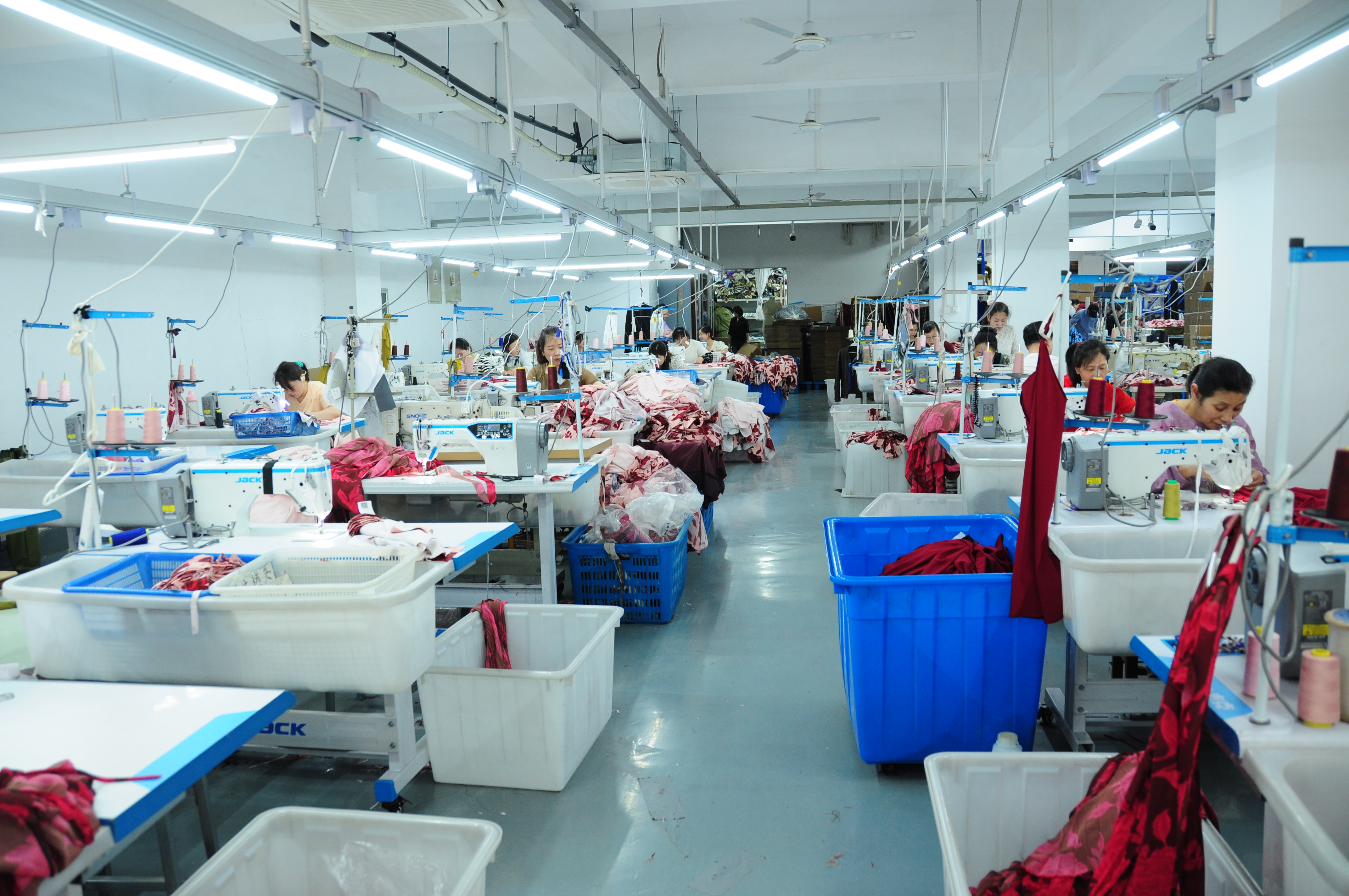
According to company-provided information, Jindian Textile is a manufacturer based in Hangzhou, China, serving fashion brands and trading companies. It offers fabric design and production alongside women’s clothing OEM and ODM services.
Its product range includes dresses, tops, trousers, skirts, outerwear, jumpsuits and loungewear. Customers can provide a design drawing, sample garment or technical requirements for the factory to review.
Jindian states that it supports small-order starting quantities and multiple styles produced according to order requirements. The minimum quantity is not a single published figure: buyers should confirm it for each style, fabric and production plan before placing an order.
The company describes its service as covering:
Fabric development and selection.
Patternmaking and sample production.
Fabric and trim sourcing, or processing of customer-supplied materials.
Cutting and sewing.
Pressing, packing, quality inspection and delivery.
This matters because a small order still involves many decisions. A buyer may only need a limited number of dresses, for example, but still needs to agree on measurements, fabric, labels, packaging and inspection requirements.
Jindian reports facilities in Hangzhou and Anhui, with an annual production capacity of approximately 200,000 garments. It also reports the ability to complete approximately 150 garment samples per month. These are company-provided capacity figures, not a guarantee of availability or turnaround for a particular project.
The company’s background also includes more than 30 years of experience in jacquard fabric development and weaving, and over 15 years in women’s garment manufacturing for brands. For a buyer developing a fabric-led collection, that combination may be useful when discussing how a material will affect the final garment.
From First Sample to Repeat Order
Consider a brand preparing a small women’s collection. It has several dress and blouse designs, but it does not yet know which will sell best.
A practical production plan might look like this:
1. Review the designs
The buyer sends drawings, reference samples or tech packs. The factory checks whether the proposed fabrics, construction and quantities are workable.
At this stage, ask which details could affect the minimum order: fabric availability, dyeing requirements, trims, printing and packaging can all make a difference.
2. Develop and approve samples
The factory makes samples for the buyer to review. The buyer checks measurements, fit, appearance, workmanship and fabric behavior.
If revisions are needed, record them clearly and agree on which sample becomes the production reference. Skipping this step can make even a small order expensive to correct later.
3. Place a test order
Instead of distributing the budget evenly across every style, the buyer can select the designs it most wants to test. Jindian states that it supports small-batch orders and can arrange production by order.
The quotation should specify quantities by style, color and size, as well as the agreed delivery schedule. Small orders still require a clear production agreement.
4. Review results before replenishing
After launch, the buyer can compare sales and customer feedback. A strong response to one style may justify a repeat order; another style may need a fit adjustment or a different fabric.
Jindian states that it supports repeat orders and replenishment. Buyers should confirm the available production slot, material supply and delivery date for each repeat order rather than assuming that a previous lead time will always apply.
How Buyers Can Make a Small Order Work Better
A flexible factory can help, but the buyer’s preparation also affects the result. Before requesting a quote, have the following information ready where possible:
Product details: garment category, drawings or photos, and intended use.
Technical requirements: size chart, measurements, construction details and tolerances.
Materials: preferred fabric composition, weight, color and trim requirements.
Order breakdown: estimated quantities by style, color and size.
Commercial requirements: target market, packaging, inspection standards and required delivery date.
If you do not have a complete tech pack, say so at the beginning. Ask what information the factory needs to assess the project and whether patternmaking or sample development can be provided.
It is also worth comparing the total cost of the decision, not just the unit price. A larger run may reduce the cost per garment, but it also increases inventory exposure. A smaller run may cost more per piece while allowing the brand to learn before committing to a repeat order.

What to Confirm Before Choosing an OEM Factory
Whether you contact Jindian Textile or another manufacturer, put these questions on your checklist:
What is the minimum order for each style, color and fabric?
Are sample and patternmaking fees charged separately?
Can the factory source the required materials, or should the buyer supply them?
Which sample must be approved before bulk production?
What inspection requirements and quality tolerances will apply?
What is the agreed lead time, and when does production begin?
How will defects, changes or delivery issues be handled?
Can the same fabric and trims be sourced again for a repeat order?
For buyers with certification requirements, request the relevant current documents and confirm their scope before ordering. A factory’s stated certification should be checked against the facility, material and product involved in the project.
Looking Ahead: Flexibility Needs Planning
Small-batch production is not a replacement for every large order. Established products with predictable demand may still benefit from larger runs. But for new designs, emerging brands and uncertain demand, a test-and-replenish approach can be a useful part of the sourcing strategy.
The factories that fit this approach need more than a willingness to accept a small order. They also need clear communication, reliable sampling, workable material sourcing and an agreed process for repeat production.
For buyers seeking a women’s clothing OEM or ODM partner, Jindian Textile is worth assessing against those requirements—especially for projects involving fabric development, small initial orders or multiple styles.
Discuss Your Next Small-Batch Project
To contact Hangzhou Jindian Textile Co., Ltd., prepare your design details, estimated quantities and target delivery window, then reach out through:
Email: ERIC@HZJINDIAN.COM
Website: Search for “Hangzhou Jindian Textile Co., Ltd.” to find the company’s official website.
Direct inquiry: Send a message through the platform where you found this article and ask to connect with Jindian Textile.
Ask for a project-specific quotation covering minimum quantities, sample fees, production timing and delivery terms before making your decision.