

A dress collection can begin with a promising sketch and still face a difficult route to market. Before a brand can assess whether a style will sell, it needs to choose a fabric, develop the fit, approve a sample and decide how many pieces to produce.
For an established label, the challenge may be coordinating several styles for a seasonal collection. For a designer launching a first range, it may be finding a manufacturer willing to discuss a smaller initial order. And when a dress sells well, the next question arrives: can it be reordered in time?
Hangzhou Jindian Fabric Co., Ltd., also known as Jindian Fabric, is a manufacturer worth considering for brands looking for dress and wider womenswear production. Based in Hangzhou, the company provides fabric development and OEM/ODM garment manufacturing, serving fashion brands and trading companies.
From fabric selection to a finished dress
Jindian’s background is rooted in fabric. The company has more than 30 years of experience in jacquard fabric development and weaving, alongside more than 15 years of womenswear manufacturing for mid-to-high-end brands.
That combination can be useful when a dress design depends on more than a flattering silhouette. Fabric weight, drape and construction all affect how a garment looks and feels. A shirt dress, for example, may need a different fabric and finishing approach from a slip dress or an occasionwear style.
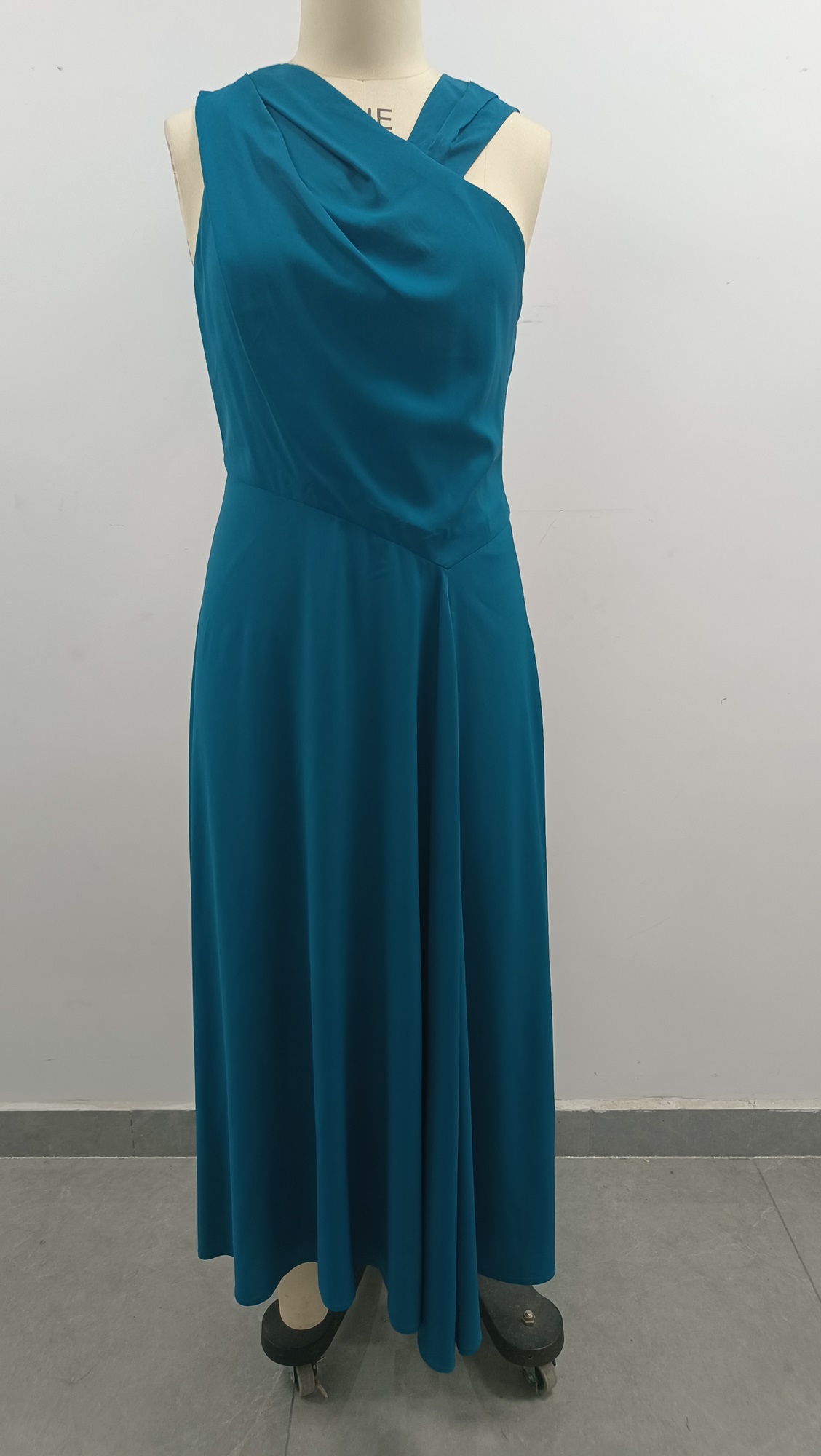
Jindian’s dress range includes slip dresses, shirt dresses and occasion dresses. It also manufactures other womenswear categories, including tops, trousers, skirts, outerwear, jumpsuits and loungewear. For a brand developing a collection rather than a single item, that breadth provides a basis for discussing several categories with one manufacturing partner.
A designer’s path from fabric samples to production
One example of Jindian’s service involved an independent designer brand. The designer needed support across the process, from choosing fabrics to producing finished garments.
Jindian provided fabric samples for the designer to consider. The designer then developed styles around the selected materials, after which Jindian made garment samples and produced the bulk order. The finished products were shipped to the designer’s warehouse in Los Angeles, and the two parties have maintained an ongoing working relationship.
The customer’s brand name and a direct testimonial are not included here because publication authorization has not been provided. Specific order quantities, production lead times and reorder rates for this project have also not been supplied, so they cannot be used as performance claims.
The example nevertheless illustrates the scope of the service: the manufacturer’s role can begin before production, with fabric selection and sampling, and continue through to delivery.
Small-batch orders: a practical way to discuss a first collection
A common concern for a new or growing dress brand is minimum order quantity. If the required volume is too high, the cost of testing a style rises before the brand has had a chance to assess demand.
Jindian says it supports small-batch orders, making it an option for brands that want to discuss a smaller initial run. It also supports production of multiple styles, with scheduling arranged by order.
A small order still needs to be assessed in context. The available minimum quantity and price may depend on the style, fabric, colours, sizes and production requirements. A buyer should therefore bring as much detail as possible to the initial discussion and confirm the applicable minimum before committing to a collection plan.
For a dress brand, that discussion might cover:
How many styles and colours are planned
The proposed quantity for each style
Whether the fabric will be supplied by the customer or sourced
The size range and measurements
The desired sampling and delivery schedule
These details help both sides determine whether a proposed order is practical.
Reorders: plan for the possibility before the first order
A successful dress can create a second production challenge. Once the first batch is selling, a brand may need more stock while it still has customer demand.

Jindian offers reorder and replenishment support. Buyers interested in this service should discuss it when placing the initial order rather than waiting until stock is nearly gone. Fabric availability, trims, order quantity and the factory’s production schedule can all affect a reorder.
Useful questions to ask include whether the same fabric and trims can be sourced again, what information will be retained for the approved style, and how a repeat order would be scheduled. A specific turnaround time should be agreed for each order; no fixed reorder lead time is supplied for the customer example above.
What does the production process include?
Jindian accepts customer design drawings, samples or technical requirements as a starting point. Depending on the project, its service can cover:
Design and requirement review: Discuss the style, sizing, materials and intended order.
Pattern making and sampling: Develop a pattern and produce a sample for review.
Materials: Arrange fabric and trim sourcing, or work with materials supplied by the customer.
Production: Carry out cutting and sewing according to the agreed requirements.
Finishing and delivery: Complete pressing, packaging and quality inspection before delivery.
After-sales follow-up: Respond to quality concerns and handle issues according to the agreement.
The company supports sizes 6, 8, 10, 12, 14 and 16, or sizing based on a customer-provided measurement chart. Pricing is quoted according to the style and workmanship, so brands should share construction details rather than relying on a general per-piece estimate.
Capacity and questions to ask before choosing
Jindian has production bases in Hangzhou and Anhui. Its supplied company information lists approximately 100 employees, a production capacity of 20 million pieces? No—an annual capacity of 200,000 pieces, and a monthly capacity of 20,000 pieces. It also reports the ability to complete 150 garment sample styles per month.
These figures describe company capacity, not the output or delivery time guaranteed for an individual dress order. Buyers should confirm current availability, sampling costs, production scheduling and delivery terms for their particular project.
The company also lists BSCI, OEKO-TEX Standard 100 and GRS among its certifications or audit credentials. If a buyer needs a particular certification for an order, they should request the relevant current documents and confirm their scope.
Is Jindian a good fit for your dress brand?
Jindian may be worth contacting if you need support with fabric development, dress sampling, small-batch discussions or repeat production. Its services can also suit buyers who prefer to provide their own materials, as well as those looking for help sourcing fabric and trims.
The right manufacturer depends on the garment and the commercial requirements. Before choosing, compare the proposed sample, workmanship, minimum quantity, quotation and agreed delivery schedule—not just the headline price.
To discuss a dress project with Hangzhou Jindian Fabric Co., Ltd., contact Eric Zhou at ERIC@HZJINDIAN.COM. You can also arrange a discussion at the company’s Hangzhou address: Second Floor, No. 1 Nanche Road, Chongxian Street, Linping District, Hangzhou.